

Famous Quotes About Analysis
Analyzing data involves examining the information to determine its connections, patterns and patterns. It could involve quantifying data into numbers and/or studying quantitative data, such as descriptions, anecdotes or opinions, quotes and so on.
Start by highlighting important words. Connect the terms by examining their connotative and definitive meanings.
1. George Box
George Box was a legendarily influential statistician. He influenced the development and use of statistical analysis techniques, as well as techniques for quality control. He is the author of numerous books on topics like regression, Bayesian statistics, time series analysis and the design of experiments. His methods are currently employed by companies like Hewlett Packard and Ford for Six Sigma and other quality improvement initiatives.
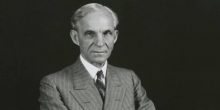
He is often quoted as saying that "all models are wrong but there are some that are useful" This is a reminder to us that no model can precisely represent the behavior of any real-world process. However, it can be very helpful if the model comes close enough to provide valuable information.
George Edward Pelham Box was born in Gravesend, Kent, England. He began his studies as a chemist. He published his first article at the age of 19. But when World War II started, the chemist was drafted to join the British Army Engineers. He was assigned to Porton Down, a chemical weapons research facility. His job was to conduct biochemical tests on poison gas that would be used against the enemy. The results of his tests were highly diverse. quotes and analysis realized that he needed the help of a statistician in order to draw any conclusions from the results. But no statistician was available and he decided to study the field himself.
After the war, Box completed his bachelor's degree in mathematics and statistics at University College, London. He was hired as a summer worker at Imperial Chemical Industries. His employer gave him the job of editing an article they were putting out on industrial experiments. He made so many improvements that he was included as a co-author in the book.
Box has published more than 200 scientific articles and nine major books on subjects such as regression, time series, the design of experiments and quality control. He was also a three-time recipient of the ASQ Brumbaugh Award and twice was awarded the Youden Prize of ASQ's Chemical and Process Industry Division. He was a member of the American Statistical Association and served as the president of the Institute of Mathematical Statistics.
2. Sherlock Holmes
Sherlock Holmes is the sly and wise detective created by author Arthur Conan Doyle. Although he's often insecure and dismissive of his fellows, Holmes has a keen understanding of how to analyze and look at the details around him. Holmes is always looking to identify clues that others may miss, and isn't afraid to challenge conventions to discover the truth.
In this short story, Holmes explains to his colleague that he "Methodically scrutinized it all using his double lens." He isn't talking about a magnifying lens but rather to a method he uses in order to focus on small pieces of evidence during an investigation. It's a perfect example of his ability to identify connections between seemingly unrelated objects.
Watson was astonished to learn that Holmes his genius spanned beyond his knowledge of literature and astronomy. He also knows a lot about poisons, such as belladonna and opium. In this case, he's making use of his knowledge of drugs to solve a murder. However, the main point is, his method can be applied to any topic that he is knowledgeable about.
In contrast to his arch-enemy Professor James Moriarty, Holmes does not rely on the premise of hope. In the fight against London's evil doers, Holmes has a keen sense of logic and reason as his only weapon. This quote from the Adventure of the Speckled Band highlights his belief in Karma and the notion of what goes around comes around.
This is an iconic Holmes quote that reveals his ferocious determination to find the ultimate truth. He will stop at no expense to bring his enemy to justice. This statement is a proof of his conviction that he won't be deterred from his goal by any obstacle or amount.
Holmes gives Watson his methods during his first case. Holmes states, "It's a methodical approach that gets to the bottom of everything." This could be a bit exaggerated however, it is a sign of how analytical and detailed the man is. His unwavering approach to logic allows him to uncover the truth faster than his peers.
3. Dean Abbott
Dean Abbott is an expert in machine learning and focuses in the analysis of complex systems. He is the writer of a variety of books on analytics and data science, including "Business Intelligence and Analytics: A Guide for Data Scientists". He believes that the future of the industry lies in empowering business leaders to make use of data and analytical tools. His main focus is using statistical and mathematical techniques to make sense of the vast amount of data available in today's world. He also stresses that regular communication is crucial between teams working on data science, businesses and other stakeholders.
To effectively analyze a quote, it's essential to comprehend its meaning and context. It is also important to consider its meaning in relation to other related ideas. If you're looking at literary quotes, you must take note of the tone and relation to the general themes.
You should also examine the vocabulary and diction used by the author. For instance examine the author's use of alliteration, and discuss the effect it can have on the reader. Also, you should look for other literary devices such as metaphors and personifications.
When you're analyzing a quote it is essential to follow correct citation methods. If you're citing a complete book, it's important to include the page number. This will allow other researchers locate the source, and also prevent them from misinterpreting your citation. It is also recommended to cite non-fiction quotes in the same way you would for any other source.
It can be difficult for novices to grasp the art of studying quotes. But, with a bit of practice, you'll be able to master the technique. Before you begin your analysis, it's beneficial to review some examples of great ones. You can write a thorough quote analysis by following these guidelines. If you're struggling, you can always get help from an Rutgers Writing Center tutor. With a little guidance from our experts, you'll be analyzing quotes in the blink of an eye!
4. Charles Dickens
Charles Dickens, an English journalist and writer of the Victorian time period, is the source for some of the most well-known characters. His short stories, novels and comics are timeless classics which continue to influence popular culture of today. Dickens was a champion for social change and often explored the challenges people face every day. His realism, humor, prose style and distinctive characterizations have been praised by his fellow writers from Leo Tolstoy to G. K. Chesterton. Dickens's linguistic skills were impressive; he used many methods to spice up descriptions, including parallelism rhyme and alliteration.
Charles John Huffam Dickens, born on February 7, 1812 in Portsmouth, England to a working-class family. After his father was sentenced into prison for debt, Dickens left school at the age of 12 to work in the industry of boot-blacking. This early experience of poverty was a major influence on his later writings, which frequently highlighted the hardships of the working class.
Dickens's literary career began with his submission of short stories and humorous sketches to various publications. He was prolific contributor and his work was published in periodic installments which allowed him to assess the reader's response and adjust according to the feedback. By the end of his life He had written 15 novels and five novellas, as well as a multitude of short stories and nonfiction pieces, spoken extensively, and fought for children's rights and other social reforms.
One of the most memorable quotes from Dickens's writing is his advice for living: "Have a heart that never hardens and a temper which never gets tired." He continues to say, "And never forget what you've learned, even though you may be forgotten yourself."
A lot of Dickens's characters undergo a journey of maturation that brings about a more harsh reality for their lives. For example, Oliver Twist, Martin Chuzzlewit and Nicholas Nickelby all have to endure the loss of their innocence as a result of poverty or changes in their socioeconomic situation.
Another theme in Dickens's works is how hope and optimism can be reflected on the people around you. In the opening lines of A Christmas Carol he writes, "the sun shines on the world, where there's still work to do, and labour to done by men who will not sit idle because the world can't afford to lose."